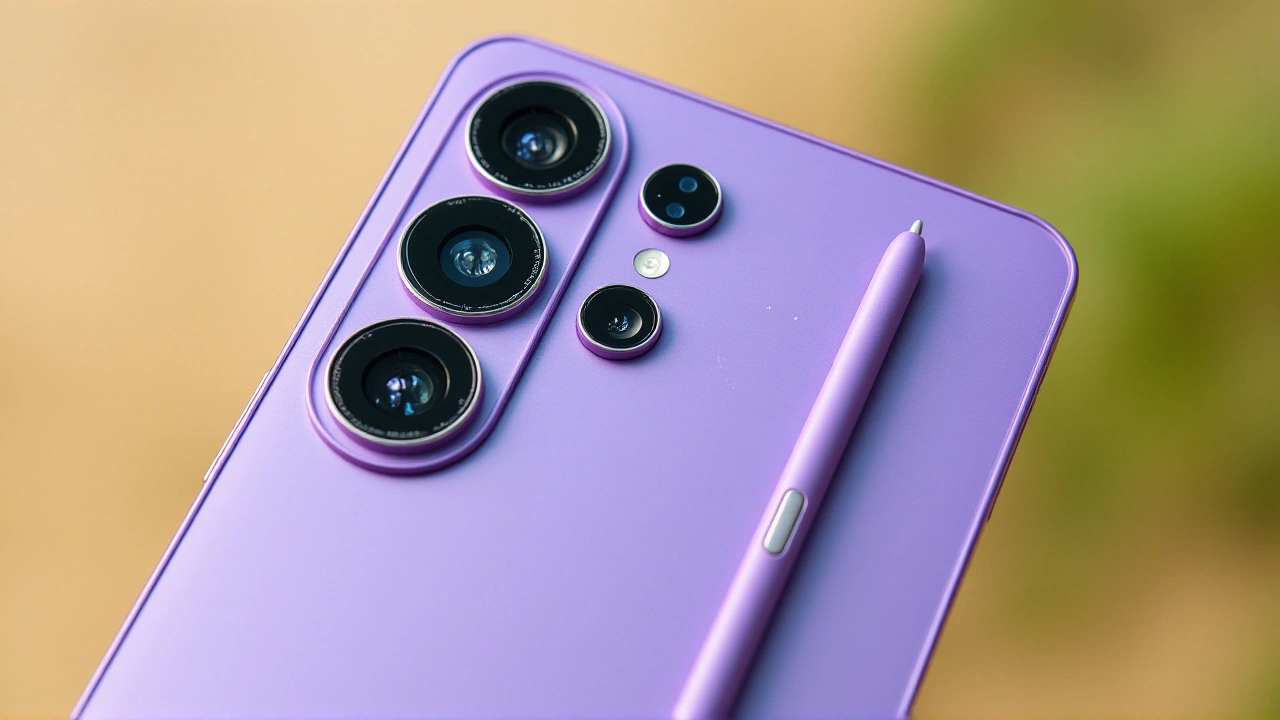
It’s 2026, and if you’re still clinging to the idea that only iPhones get the digital ink treatment, it’s time to let go. The Android ecosystem has quietly cornered the market on active stylus support, offering everything from budget-friendly note-takers to foldable powerhouses. But here’s the catch: not every phone with a pen slot is created equal, especially if you live in the United States. Network compatibility matters just as much as pixel precision.
According to recent analysis by BGR, three specific devices stand out as the definitive choices for American users seeking stylus functionality. They didn’t just pick the flashiest gadgets; they filtered out models lacking critical U.S. 5G bands (specifically n71 and n77), ensuring these phones actually work reliably across major carriers like T-Mobile and Verizon.
The Budget King: Moto G Stylus (2026)
Let’s start with the surprise entry. You don’t need to spend a fortune to get a good writing experience. The Moto G Stylus (2026) hit shelves in April 2026, positioning itself squarely in the midrange segment. At a starting price of $500 for the 128 GB model, it’s aggressively priced compared to its flagship competitors.
Why does this matter? Because for students or casual note-takers, the barrier to entry is significantly lower. BGR highlights this device as the go-to for affordability without sacrificing the core utility of a built-in stylus. It’s not going to replace your Wacom tablet for professional illustration, but for jotting down meeting notes or signing PDFs, it’s surprisingly capable. The key takeaway here is value: you get dedicated hardware input for half the price of the competition.
The Flagship Standard: Samsung Galaxy S26 Ultra
Then there’s the heavyweight champion. The Samsung Galaxy S26 Ultra continues Samsung’s decade-long dominance in the stylus smartphone space. While the Moto G offers accessibility, the S26 Ultra offers raw power. CNET’s 2026 expert review list places this device at the top tier, alongside the Pixel 10 Pro Fold and OnePlus 15, noting its comprehensive feature set.
This isn’t just about having a pen; it’s about what the pen can do. The S26 Ultra leverages advanced AI tools like the "AI Select" tool and "Audio Eraser," features that are deeply integrated into the user interface. When you tap the screen with the S Pen, you’re not just drawing—you’re interacting with a sophisticated layer of software intelligence. Paired with a custom Snapdragon 8 Elite processor and 12GB of RAM, the latency is virtually non-existent. It feels like writing on paper because the tech is fast enough to keep up with your hand.
The Foldable Frontier: Samsung Galaxy Z Fold 6
Here’s where things get interesting. For years, folding phones and styluses were oil and water—too thick, too fragile. But the Samsung Galaxy Z Fold 6 has changed the narrative. BGR explicitly calls it "the top folding device in the U.S. that comes with proper stylus support."
This distinction is crucial. Many foldables claim stylus compatibility via Bluetooth accessories, but the Fold 6 integrates it seamlessly into its form factor. Whether you’re sketching on the inner large display or taking quick notes on the outer cover screen, the experience is unified. It’s a productivity beast for professionals who need a tablet-sized canvas in their pocket. The "move" BGR references likely points to Samsung’s engineering breakthroughs in thinning the S Pen motor while maintaining durability within the hinge mechanism—a feat few other manufacturers have replicated.
Why Network Bands Matter More Than You Think
You might wonder why BGR excluded popular Chinese-market phones or earlier global variants. The answer lies in connectivity. The U.S. relies heavily on 5G bands n71 and n77 for wide-area coverage. Phones designed primarily for European or Asian markets often lack these specific frequencies.
If you buy a stylus phone that doesn’t support these bands, you’ll be stuck on slower LTE networks or spotty 5G connections, depending on your carrier. By filtering for "full frequency support," BGR ensures that the stylus experience isn’t hampered by poor network performance when you’re trying to sync cloud notes or stream media while working. It’s a subtle but vital detail for anyone buying outside of gray-market channels.
Broader Market Context
The landscape is shifting. PhoneArena’s catalog shows a growing list of stylus-capable devices, including the upcoming Samsung Galaxy S27 Ultra and previous generations like the S25 Ultra. Even Motorola is iterating quickly, with the Moto G Stylus 5G (2025) still holding relevance. Retailers like Best Buy are dedicating entire sections to "Phones with Stylus," signaling that consumer demand is no longer niche—it’s mainstream.
Meanwhile, YouTube reviewers are pushing lists like the "Top 5 Best Phones With Stylus Pen of 2026," featuring entries like the Oppo Find N5 and Motorola Edge 60 Stylus. This saturation means buyers have more choice than ever, but also more confusion. The key is distinguishing between marketing hype and actual usability.
What’s Next for Stylus Tech?
We’re seeing a convergence of AI and haptics. Future iterations will likely focus on pressure sensitivity improvements and even better palm rejection algorithms. As processors like the Snapdragon 8 Elite become standard, expect stylus interactions to trigger more complex AI workflows—think real-time language translation as you write, or instant diagram generation from rough sketches.
For now, however, the trio identified by BGR represents the sweet spot: affordable entry, flagship performance, and innovative form factors. If you’re upgrading in late 2026, these are the benchmarks against which all others should be measured.
Frequently Asked Questions
Is the Moto G Stylus (2026) worth $500?
Yes, if stylus support is a priority. At $500 for the 128 GB model, it offers one of the lowest price points for a new Android phone with an integrated active stylus. It’s ideal for students or light users who don’t need flagship-level cameras or processing power but want reliable note-taking capabilities.
Does the Samsung Galaxy Z Fold 6 include the S Pen in the box?
The inclusion varies by region and retailer, but BGR highlights the Fold 6 as having "proper stylus support," implying seamless integration. Unlike older foldables where the pen was a bulky accessory, the Fold 6 is engineered to accommodate the S Pen without compromising the hinge. Check specific retail listings for bundle details.
Why were Chinese-brand phones excluded from the top list?
BGR excluded many Chinese-market phones because they often lack support for U.S. 5G bands n71 and n77. Without these bands, performance on major U.S. carriers like T-Mobile and AT&T would be suboptimal, leading to slower data speeds and less reliable connectivity, which detracts from the overall user experience.
How does the S26 Ultra’s stylus compare to the S25 Ultra?
The S26 Ultra builds on the S25 Ultra’s foundation with enhanced AI integration, including tools like AI Select and Audio Eraser. Powered by the custom Snapdragon 8 Elite processor, it offers lower latency and faster response times. While the core writing experience remains similar, the software ecosystem around the pen is significantly more intelligent in the 2026 model.
Can I use any stylus with these Android phones?
No, these phones require specific active styluses designed for their respective brands. The Moto G Stylus uses Motorola’s proprietary pen, while Samsung devices require the S Pen. Universal passive capacitive pens may work for basic tapping but will lack pressure sensitivity, palm rejection, and air-gesture features found in the native styluses.